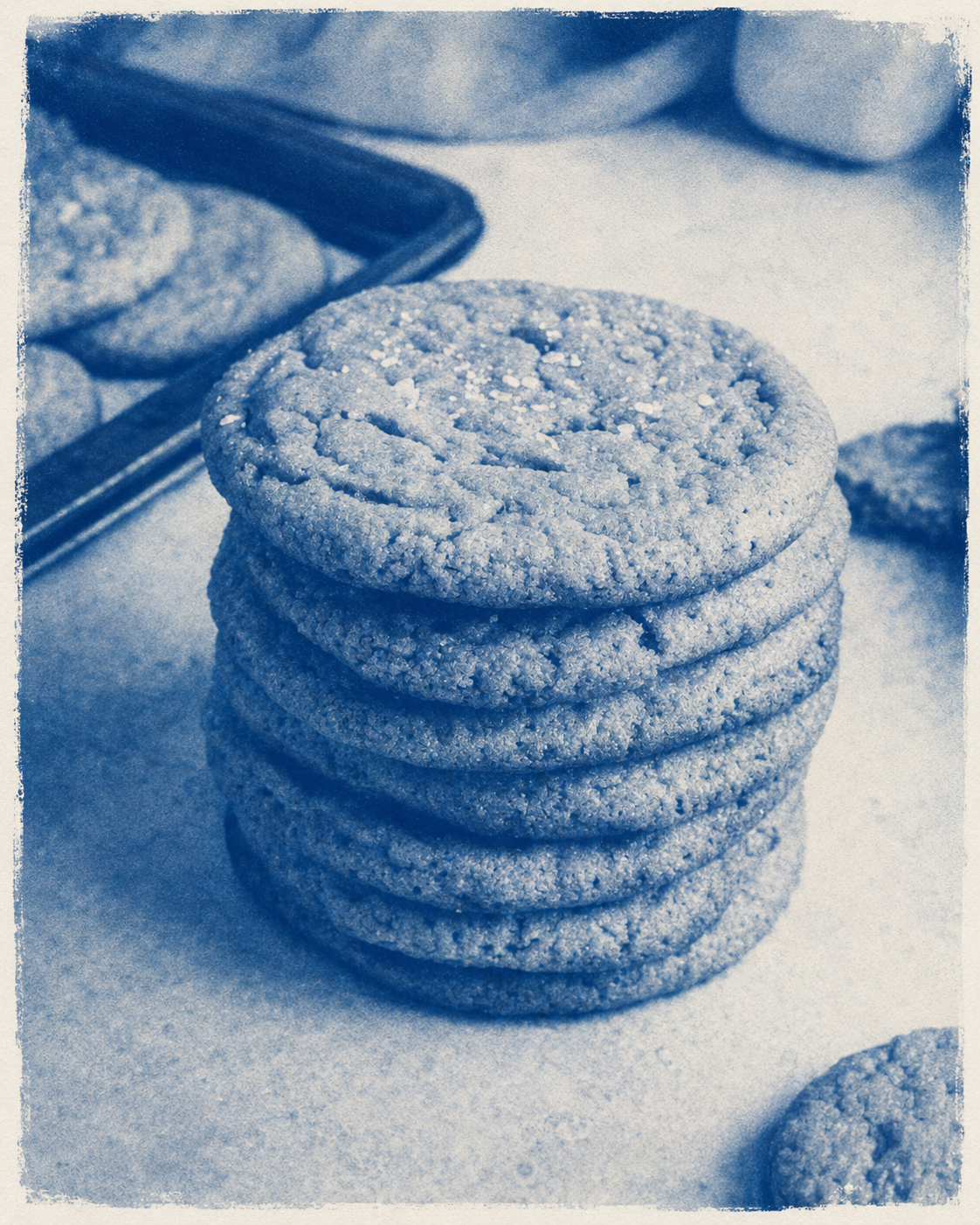
When Umami Meets the Shortbread Biscuit
Miso is usually associated with soup, marinades, sauces and other savoury preparations. But once you start treating miso as an ingredient rather than as something belonging to a specific set of dishes, it becomes much more versatile. One of our favourite examples is something very simple: a butter cookie.
In this recipe, miso works partly like salt, balancing the sweetness and making the flavour of the butter more pronounced. But unlike salt, miso brings along everything that happened during its fermentation: amino acids, sugars, aromas from the grain or soybean, and the flavours developed during ageing.
The choice of miso therefore makes a real difference. A young shiro miso gives a mild, almost caramel-like result. Barley miso brings cereal and toasted notes. An older soybean miso can be much darker, saltier and more intense, so you will need less of it.
There is no perfect miso for these cookies. Taste yours first and adjust the recipe accordingly.
Why Does Miso Work So Well in a Cookie?
During miso production, the enzymes created by koji gradually break down the proteins and carbohydrates in soybeans, barley or rice. Proteins are broken into smaller peptides and amino acids, including glutamate, while starches are transformed into simpler sugars.
When miso enters a buttery, sweet dough, these compounds interact with everything that happens during baking. Sweetness, saltiness, fermentation and toasted flavours reinforce one another. The result should not necessarily taste strongly of miso. Instead, the cookie becomes deeper, more savoury and slightly difficult to place.
This is also why an aged three-year soybean miso cannot simply be treated in the same way as a six-month shiro miso. The first might dominate the biscuit at 80 g, while the second can remain surprisingly subtle.
Miso Cookies
Makes approximately 70 to 80 small cookies
Ingredients
60 to 80 g miso
Soybean, barley or shiro miso all work.
230 g semi-salted butter, at room temperature
200 g sugar
1 egg
400 g self-raising flour
Alternatively, use 400 g T45 or T55 flour with approximately 6 g baking soda.
For coating:
Cane sugar, brown sugar, or a mixture of brown sugar and muscovado sugar.
Method
Cream the softened butter, sugar and miso together until completely homogeneous. Take a little time here so that the miso is distributed evenly throughout the butter. Add the egg and mix again.
Add the flour and mix just until a firm cookie dough forms. If the dough is too sticky to shape comfortably, resist adding lots of extra flour immediately. Refrigerate it for about 30 minutes first. As the butter firms up, the dough will become much easier to handle.
Divide the dough into four pieces and roll each one into a log. Sprinkle your cane sugar, brown sugar or muscovado mixture over the work surface and roll each log through it until the outside is evenly coated. Wrap the four logs and refrigerate them for approximately 2 hours.
Preheat the oven to 175°C.
Remove the logs from the refrigerator and cut them into slices approximately 5 to 10 mm thick. Arrange them on baking trays with a little room between each cookie.
Bake for 12 to 15 minutes. Look for lightly coloured edges while the centres remain slightly tender. They will continue to firm up as they cool.
Leave them to cool for at least 10 minutes before moving them. Once completely cool, store them in an airtight container. They will easily keep for at least a week and, if kept dry and cool, potentially considerably longer.
Try It With Different Misos
One of the nicest ways to use this recipe is to make it more than once.
Make one batch with a young shiro miso, another with barley miso and another with a strongly aged soybean miso. Keep the rest of the recipe identical and suddenly the cookie becomes a very simple way of tasting what fermentation and ageing actually do to miso.