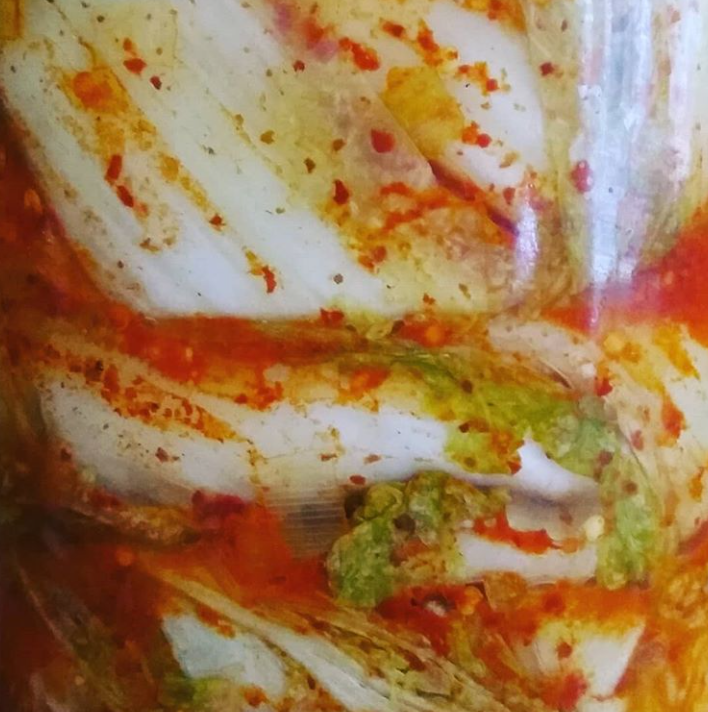
Chinese cabbage kimchi is the foundation of Korean fermentation. It is built on salt, time, and attention rather than speed. At Fermenthings, we use a controlled brining method and a longer fermentation to create a stable, deeply flavored kimchi that ages well and cooks beautifully.
This method favors consistency and balance over shortcuts.
Fermentation Type
Lacto-fermentation
Level
Intermediate
Tools
Large container or food-grade tub
Knife
Clean jars or fermentation crock
Weights if needed
Ingredients
-
Chinese cabbage, whole or halved
-
Kimchi paste, prepared in advance
-
Water
-
Salt for a 3% brine
-
Optional vegetables
Daikon radish, carrots, spring onion, leek greens
Step 1: Brining the Cabbage
Prepare a 3% salt brine by dissolving 30 g of salt per liter of water. Make enough brine to fully submerge the cabbages.
Cut the cabbages lengthwise into halves or quarters, keeping the core intact. Submerge them completely in the brine and weigh them down if needed to prevent floating.
Let the cabbages sit in the brine for 4 to 8 hours, depending on their size and freshness. Turn them once or twice to ensure even salting.
Properly brined cabbage should be flexible, well seasoned throughout, and still slightly crisp.
Step 2: Draining and Preparing
Remove the cabbages from the brine and let them drain thoroughly for at least 30 minutes. Do not rinse. The goal is to keep the salt level consistent while removing excess surface liquid.
The leaves should feel moist but not dripping. This ensures good adhesion of the paste and a controlled fermentation.
Step 3: Preparing for Seasoning
If using additional vegetables such as julienned daikon or carrots, mix them first with the kimchi paste. This allows for even distribution and prevents clumping.
Check the cabbage once more. If liquid pools between the leaves, gently shake or press it out.
Step 4: Applying the Kimchi Paste
Working by hand, apply the kimchi paste between each leaf, starting from the base and moving outward. Make sure every layer is coated, but avoid excess paste collecting in one place.
This step determines how evenly the kimchi ferments. Take your time.
Fold the outer leaves over to form a compact bundle.
Step 5: Packing the Kimchi
Pack the cabbages tightly into clean jars or a fermentation crock. Press down firmly to remove trapped air and encourage juices to rise.
Leave a few centimeters of headspace. Kimchi is active and will expand as fermentation progresses.
If necessary, use a weight to keep everything submerged in its own liquid.
Step 6: Fermentation
Let the kimchi ferment at room temperature for 8 to 10 days. This longer fermentation allows acidity to develop slowly and evenly, resulting in a more stable and complex flavor.
Check daily after day 5. The kimchi should smell fresh, sour, and lactic. Once it reaches the level of acidity you prefer, move it to the refrigerator.
Cold storage slows fermentation but does not stop it. Flavor will continue to deepen over time.
How Kimchi Evolves
-
Early stage: crunchy, bright, and lightly acidic
-
Mid stage: balanced, savory, and aromatic
-
Late stage: soft, rich, and perfect for cooking
Old kimchi is not past its prime. It is simply ready for another role.
Fermentation Notes
Brining in a measured salt bath creates consistency across batches and reduces the risk of uneven fermentation. Keeping the process slow and controlled allows lactic acid bacteria to dominate without harsh acidity.
Trust your senses. A clean, sour smell is a sign of success.